
BLOG
SUMMER BOARDING COURSES
The hardest degree subjects and what students get wrong about them
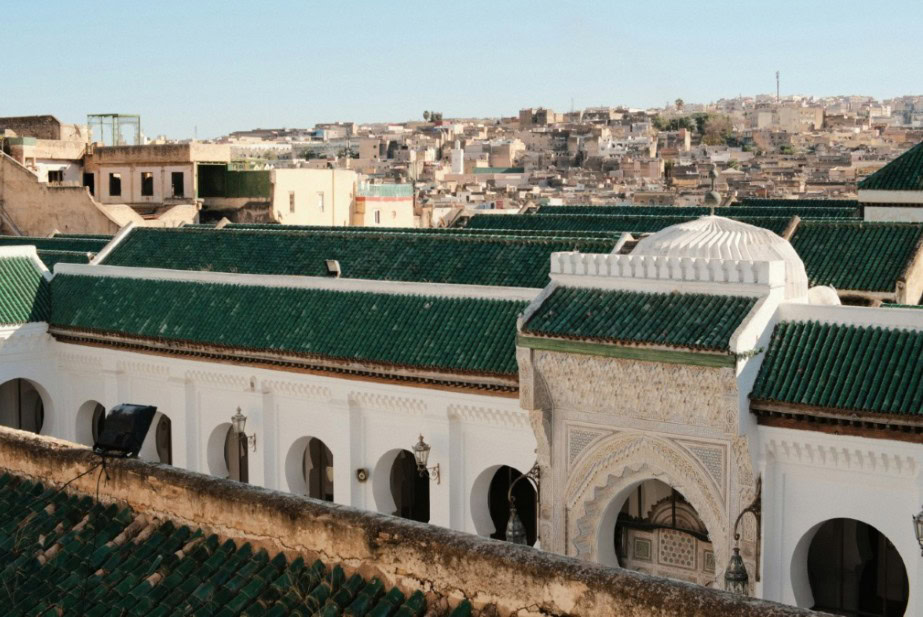
Ask “what’s the oldest university in the world?” and you’d expect one tidy answer. Instead you get a genuine, centuries-old debate that historians still enjoy arguing over. The honest answer depends entirely on how you define a university — and once you understand that, the whole story becomes far more interesting.
The short answer: the oldest university in the world is the University of al-Qarawiyyin in Fez, Morocco, founded in 859 AD. UNESCO and Guinness World Records both recognise it as the oldest existing, continuously operating degree-granting institution on Earth.
But there’s a catch. If you define a “university” strictly as the medieval European model — a self-governing community of scholars awarding formal degrees — then the oldest is the University of Bologna in Italy, founded around 1088. Both answers are correct. The difference is what you mean by the word.
Below, we settle the definitions, then count down the 15 oldest universities still teaching today, in the order they were founded. Each one has survived plagues, revolutions, wars and the slow grind of nine hundred years — and almost all of them are still enrolling students this September.
Why there’s no single “oldest university”
The disagreement comes down to one word: university. Three different definitions pull the answer in three directions.
The oldest institution of higher learning still operating is al-Qarawiyyin (859 AD). It began as a mosque and madrasa founded by Fatima al-Fihri, and grew into a centre that has taught continuously ever since. UNESCO, Guinness World Records and the Encyclopædia Britannica all point to it as the oldest surviving place of higher education.
The oldest university in the European sense is Bologna (1088). The word “university” comes from the Latin universitas — a community of teachers and scholars — and that specific structure, with its self-governance and formal degrees, was a medieval European invention. Bologna was the first, and it’s often called the oldest university in the Western world.
The oldest centres of learning of all are older still — but no longer with us. Nalanda in India dates to roughly the 5th century CE, and Takshashila (Taxila) is older again. They were extraordinary, but Nalanda was destroyed in the 12th century and never reopened, so it fails the test that almost every “oldest university” list applies: continuous operation into the modern era.
That continuity rule is why some famous names are missing. The original University of Paris, for instance, was abolished during the French Revolution in 1793, breaking its chain — so the medieval Paris and today’s Paris universities are counted as different institutions. With the definitions clear, here’s the list.
The 15 oldest universities in the world at a glance
Founding dates follow the years historians most commonly cite for when each institution became a university or began continuous teaching; some institutions date their own origins earlier. Ranked oldest first.
| # | University | Location | Teaching began | Best known for |
|---|---|---|---|---|
| 1 | University of al-Qarawiyyin | Fez, Morocco | 859 AD | Oldest existing higher-learning institution |
| 2 | Al-Azhar University | Cairo, Egypt | 970 AD | Leading centre of Islamic scholarship |
| 3 | University of Bologna | Bologna, Italy | 1088 | Oldest university in the Western sense |
| 4 | University of Oxford | Oxford, England | 1096 | Oldest in the English-speaking world |
| 5 | University of Cambridge | Cambridge, England | 1209 | Founded by scholars who left Oxford |
| 6 | University of Salamanca | Salamanca, Spain | 1218 | Oldest in the Spanish-speaking world |
| 7 | University of Padua | Padua, Italy | 1222 | Galileo’s university; early anatomy |
| 8 | University of Naples Federico II | Naples, Italy | 1224 | World’s oldest public university |
| 9 | University of Siena | Siena, Italy | 1240 | One of Italy’s oldest, still thriving |
| 10 | University of Coimbra | Coimbra, Portugal | 1290 | Oldest in Portugal; UNESCO heritage site |
| 11 | Sapienza University of Rome | Rome, Italy | 1303 | Founded by Pope Boniface VIII |
| 12 | University of Pisa | Pisa, Italy | 1343 | Galileo’s home university |
| 13 | Charles University | Prague, Czech Republic | 1348 | Oldest in Central Europe |
| 14 | Jagiellonian University | Kraków, Poland | 1364 | Where Copernicus studied |
| 15 | University of Vienna | Vienna, Austria | 1365 | Oldest in the German-speaking world |
The 15 oldest universities, in detail
1. University of al-Qarawiyyin — Fez, Morocco (859 AD)
Founded in 859 AD by Fatima al-Fihri, a young woman who spent her inheritance building a mosque and school for her community, al-Qarawiyyin grew into the oldest continuously operating place of higher learning anywhere. More than 1,100 years later it is still teaching in the heart of Fez, and its historic library still holds Fatima’s original founding document. It is the oldest university in both Africa and the world.
2. Al-Azhar University — Cairo, Egypt (970 AD)
Established as a mosque and madrasa around 970 AD under the Fatimid caliphate, Al-Azhar became one of the most influential centres of Islamic scholarship in the world — a status it holds to this day. It now operates as a full modern university teaching everything from theology and law to medicine and engineering.
3. University of Bologna — Bologna, Italy (1088)
Bologna gave the world the very word “university”. Founded around 1088 and run, unusually, by its students rather than its masters, it pioneered the structured, degree-awarding model that every European university would copy. It is still one of Italy’s largest and most respected institutions, and the oldest university in Europe.
4. University of Oxford — Oxford, England (1096)
Teaching at Oxford can be traced to 1096, but it grew rapidly after 1167, when English students barred from the University of Paris came home to study. Its collegiate system — autonomous colleges clustered around a shared university — has shaped English-language higher education ever since, and remains the model copied around the world. It is the oldest university in the English-speaking world.
5. University of Cambridge — Cambridge, England (1209)
Cambridge owes its existence to a quarrel. In 1209, a group of Oxford scholars fled a violent dispute with the local townspeople and settled in the fenland town of Cambridge. The two universities have been intertwined rivals — collectively “Oxbridge” — for more than 800 years.
6. University of Salamanca — Salamanca, Spain (1218)
Founded in 1218, Salamanca is the oldest university in the Spanish-speaking world and one of Europe’s most storied. Its scholars were famously consulted on Christopher Columbus’s plans to sail west, and its golden sandstone halls are still in daily use.
7. University of Padua — Padua, Italy (1222)
Padua was created in 1222 by scholars who left Bologna in search of greater academic freedom — and freedom became its signature. Galileo taught here, and its anatomical theatre, built in 1594, is the oldest surviving in the world.
8. University of Naples Federico II — Naples, Italy (1224)
Most early universities grew up organically or under the Church. Naples was different: Emperor Frederick II founded it deliberately, by royal charter, in 1224 — making it the oldest public, state-founded university in the world. It still carries his name.
9. University of Siena — Siena, Italy (1240)
Dating from 1240, Siena is among Italy’s oldest universities. It closed briefly during the Napoleonic Wars in the early 1800s but kept its institutional thread unbroken, and today it is especially known for welcoming international students to its Tuscan hill-town campus.
10. University of Coimbra — Coimbra, Portugal (1290)
The oldest university in Portugal, Coimbra was founded in 1290 and spent its early centuries shuttling between Lisbon and Coimbra before settling permanently. Its spectacular baroque Joanina Library and historic core are now a UNESCO World Heritage Site.
11. Sapienza University of Rome — Rome, Italy (1303)
Founded by Pope Boniface VIII in 1303 to give Rome a university of its own, Sapienza has grown into one of the largest universities in Europe, educating tens of thousands of students within sight of the ancient city’s monuments.
12. University of Pisa — Pisa, Italy (1343)
Formally chartered in 1343, Pisa is forever tied to its most famous student and teacher, Galileo Galilei. The city’s leaning tower and the university’s long scientific tradition still draw curious students from across the globe.
13. Charles University — Prague, Czech Republic (1348)
Founded in 1348 by Charles IV, Holy Roman Emperor, Charles University was the first university in Central Europe and remains the Czech Republic’s most prestigious. It has educated scientists, writers and reformers for nearly seven centuries.
14. Jagiellonian University — Kraków, Poland (1364)
Poland’s oldest university, founded in 1364, counts the astronomer Nicolaus Copernicus among its students. Its medieval Collegium Maius is one of the best-preserved university buildings in Europe.
15. University of Vienna — Vienna, Austria (1365)
Rounding out the list, the University of Vienna was founded in 1365 and is the oldest university in the German-speaking world. It has been home to an astonishing roster of thinkers, from Sigmund Freud to a long line of Nobel laureates.
Spotlight: the oldest universities in the English-speaking world
For students who plan to study and work in English, two of these names matter more than the rest. Oxford (1096) and Cambridge (1209) are the two oldest universities in the English-speaking world, and the collegiate model they invented — small tutorial groups, a residential community of scholars, learning that happens as much over dinner as in the lecture hall — is the template that universities from Harvard to Melbourne have borrowed ever since.
What’s remarkable is that these aren’t museums. They are living, working universities, and the cities around them — Oxford and Cambridge — are still among the most exciting places in the world to be a curious young person. The bookshops, the river, the debating societies, the sense that nine centuries of ambition are pressing on your shoulders: it’s a particular kind of inspiration, and it tends to stay with people.

Explore Oxford This SummerReading about these places is one thing. Living and learning in them, even for a summer, is another. Summer Boarding Courses runs residential summer programmes for ages 8–17 in the historic university cities of Oxford and Cambridge — where students study subjects they love, build confidence and independence, and get an early, genuine taste of university life in two of the world’s great academic towns.
It’s the difference between knowing the story and starting to write your own.
British Council accredited, with a maximum 15/15 areas of strength. Welcoming students from over 155 countries since 2008.
The University of al-Qarawiyyin in Fez, Morocco, founded in 859 AD, is recognised by UNESCO and Guinness World Records as the oldest existing, continuously operating degree-granting institution in the world. If you define a university strictly as the medieval European model, the oldest is the University of Bologna, founded around 1088.
The University of al-Qarawiyyin is in Fez, Morocco. It was founded in 859 AD by Fatima al-Fihri and is still teaching today.
The University of Bologna in Italy, where teaching began around 1088, is the oldest university in Europe in continuous operation and is often called the oldest university in the Western world.
No. The University of Oxford, where teaching dates from 1096, is the oldest university in the English-speaking world, but al-Qarawiyyin (859) and Bologna (1088) are both older. Oxford is the second-oldest surviving university overall by the European model.
Ready to make this summer extraordinary?
Give your child the advantage of personalised, high-quality education this summer.