
BLOG
SUMMER BOARDING COURSES
The Most Famous and Influential Women in History
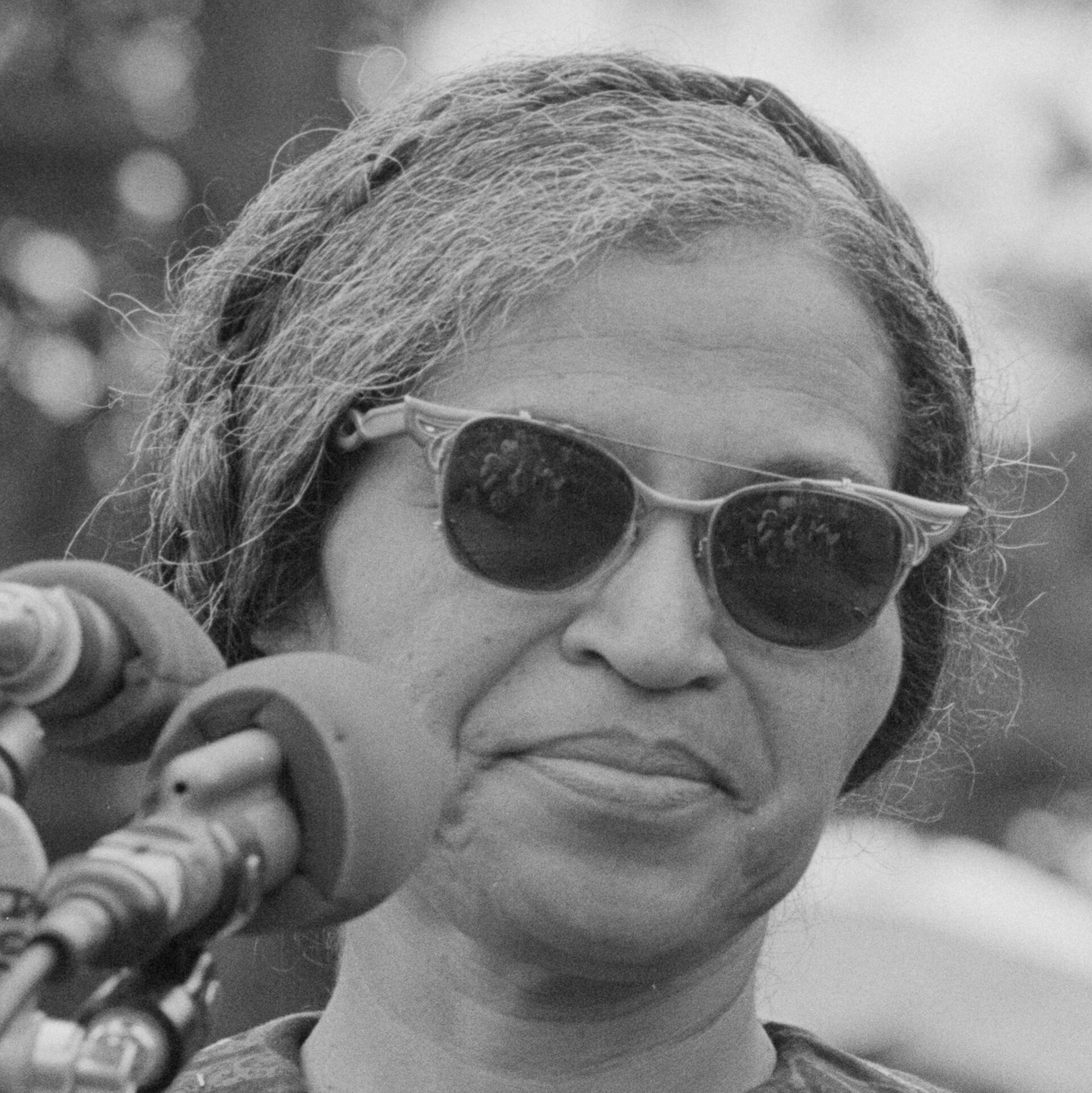
Influence in history is often recorded through laws, borders, discoveries, and books. It is less often recorded through education, organisation, care, or resistance, even though these forces shape societies just as powerfully.
The women in this article are included for clear reasons. Each changed the direction of history in a way that lasted. Their influence can be traced through political systems, scientific progress, civil rights, or how people think and learn. This is not a list of role models or inspirational stories. It is a record of impact, supported by evidence, and relevant to how history, politics, science, and literature are studied today.
For students, these figures offer strong examples for essays, debates, and wider reading. For parents, they reflect the kind of intellectual curiosity and global awareness that education should encourage.
Political power and leadership
Cleopatra VII
Cleopatra VII ruled Egypt during one of the most unstable periods of ancient history. Her influence extended far beyond her own kingdom because Egypt’s survival was tied directly to Roman politics. By forming alliances with Julius Caesar and later Mark Antony, Cleopatra became part of the struggle that decided Rome’s future.
What makes her historically significant is not personality or legend, but timing and consequence. After her death in 30 BCE, Egypt was absorbed into the Roman Empire. This ended centuries of independent rule and gave Rome control of one of the Mediterranean’s most valuable regions.
What changed: Egypt’s annexation reshaped Roman power, trade, and imperial stability for generations.
Elizabeth I
Elizabeth I inherited a divided kingdom. Religious conflict, questions of legitimacy, and pressure from European powers defined the early years of her reign. Through careful political management, she established a religious settlement that avoided civil war and allowed England to stabilise.
Her leadership during the conflict with Spain, particularly around the defeat of the Spanish Armada in 1588, became central to England’s national identity. Elizabeth’s reign also coincided with major cultural growth, including developments in literature and exploration.
What changed: England’s political stability and international position were secured at a critical moment in European history.
Indira Gandhi
Indira Gandhi was a dominant figure in post-independence India. As Prime Minister, she made decisions that shaped India’s economic direction, foreign policy, and democratic institutions. Her leadership was controversial, especially during the Emergency period of the 1970s, when civil liberties were suspended.
This complexity is exactly why she matters historically. Gandhi’s career shows how leadership can strengthen a state while also testing democratic limits.
What changed: India’s political structure and global role were shaped by decisions made during her time in office.
Science, medicine, and innovation
Ada Lovelace
Ada Lovelace worked with Charles Babbage on his proposed Analytical Engine. What set her apart was her understanding of what the machine could become. She described how it might follow symbolic instructions rather than simply calculate numbers.
Although the technology did not yet exist to build such a machine, her ideas anticipated modern computer programming.
What changed: Lovelace introduced the concept that machines could process information abstractly, forming a foundation for computing.
Marie Curie
Marie Curie transformed modern science through her research on radioactivity. She remains the only person to win Nobel Prizes in two different scientific fields. Her work contributed to advances in physics, chemistry, and medical treatment.
She also challenged assumptions about who could succeed in scientific research, working in institutions that often excluded women.
What changed: Scientific understanding of radiation expanded, influencing medicine, industry, and research ethics.
Rosalind Franklin
Rosalind Franklin’s work in X-ray diffraction produced some of the clearest images of DNA ever taken at the time. Her data was central to understanding the double-helix structure, even though recognition came later.
Her story is now widely studied in discussions about collaboration, credit, and ethics in science.
What changed: The structure of DNA was identified, transforming genetics, medicine, and biology.
Florence Nightingale
Florence Nightingale is remembered for her work during the Crimean War, but her influence extended far beyond nursing practice. She applied statistical analysis to healthcare, showing how sanitation and hospital design directly affected survival rates.
She also helped professionalise nursing through formal training and standards.
What changed: Modern nursing and public health systems became evidence-based and structured.
Civil rights, freedom, and education
Harriet Tubman
Harriet Tubman escaped slavery and returned repeatedly to help others do the same. Through the Underground Railroad, she led enslaved people to freedom at enormous personal risk. During the American Civil War, she also supported Union efforts as a scout and nurse.
What changed: Tubman demonstrated how individual action could directly undermine systems of oppression.
Rosa Parks
Rosa Parks’ refusal to give up her seat on a bus in Montgomery was not spontaneous. It was a deliberate act of resistance supported by civil rights organisations. Her arrest triggered the Montgomery Bus Boycott, which lasted over a year.
The boycott demonstrated the power of organised, nonviolent protest.
What changed: Segregation laws faced sustained legal and social challenge, accelerating the US civil rights movement.
Malala Yousafzai
Malala Yousafzai became an international advocate for girls’ education after surviving an attack by the Taliban. Her work focuses on access to education as a human right, particularly in regions where girls are excluded from schooling.
She remains one of the youngest recipients of the Nobel Peace Prize.
What changed: Global attention intensified around education inequality and the long-term impact of denying access to learning.
Wangari Maathai
Wangari Maathai founded the Green Belt Movement, linking environmental protection with women’s rights and democratic participation. Her work showed that sustainability and social justice are closely connected.
She became the first African woman to receive the Nobel Peace Prize.
What changed: Environmental activism became tied to governance, peace, and community leadership.
Culture, literature, and ideas
Jane Austen
Jane Austen’s novels are studied for their precise social observation and lasting influence on the modern novel. Through everyday settings, she examined class, gender, and morality with clarity and restraint.
What changed: Literature became a space for subtle but powerful social critique.
Mary Wollstonecraft
Mary Wollstonecraft argued that women’s inequality was rooted in lack of education, not ability. Her political writing challenged Enlightenment thinkers to apply reason consistently.
What changed: Feminist political philosophy gained a foundation still referenced today.
Simone de Beauvoir
Simone de Beauvoir reframed how society understands gender, identity, and power. Her work influenced philosophy, sociology, and political theory across the world.
What changed: Gender became understood as a social condition shaped by culture and history.
Frida Kahlo
Frida Kahlo used art to explore identity, politics, and physical experience. Her work challenged conventions and continues to influence discussions around representation.
What changed: Art became a tool for political and personal expression on a global scale.
Why this matters for students today
These women are not important because they are inspirational. They are important because their actions produced measurable change. Studying them builds the skills history and global education require: evidence-based argument, critical thinking, and awareness of how individuals shape systems.
At SBC, students explore these ideas through history, science, global leadership, and literature courses, learning how past decisions connect to present challenges. Understanding influence is part of preparing for the future.
Interested in learning more?
Explore SBC’s academic summer programmes and pre-university pathways, designed to help students build confidence, independence, and a global perspective through education.